Free Hit Counter גילוי מילתא בעלמא Giluy Milta B'alma

9/22/2009

Leor Jacobi: Prayer of Nehunaya ben Haqanna without Psalm 55:24

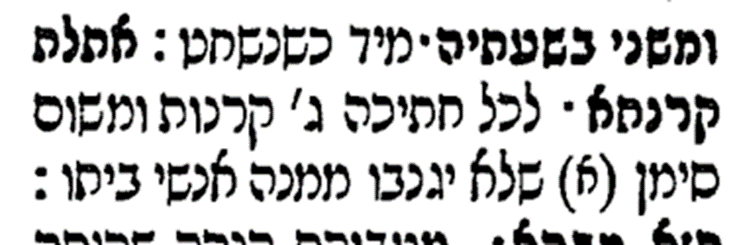
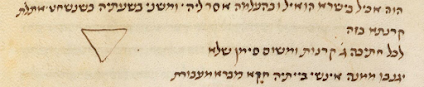
The prayer of R. Nehunya ben HaQanna, recited upon entering the house of study as found in all versions of Bavli Brachoth 27b does not include the ending verse found in many prayerbooks and in the Hadaran recited at the conclusion of a Talmudic Tractate or Mishnaic Order: Psalms 55:24. שנאמר וְאַתָּה אֱלוהִים תּוֹרִדֵם לִבְאֵר שַׁחַת אַנְשֵׁי דָמִים וּמִרְמָה לֹא יֶחֱצוּ יְמֵיהֶם וַאֲנִי אֶבְטַח בָּךְ No medieval sources quote the verse in conjunction with the prayer. The inappropriate vitriolity of the verse in the context of this prayer has been pointed out by Torah giants such as Rav Kook (end of Ginzei Qedem, Vol. 1) and the Munkatch Rebbe (Divrei Torah, Mahadura 5, end of paragraph 60). The earliest known source for the inclusion of the verse is in printed versions of Hilchoth Alfasi (RIF). No manuscript versions contain the verse! However, one manuscript, Oxford Huntington 135 contains a reference to a different verse in a marginal note, the verse cited in the version of the prayer in Yershalmi Brachoth: Psalms 16:10 . It goes without saying that this verse is most appropriate in the context of the prayer. It seems likely that the printers of RIF, unfamiliar with the traditions of the Talmud Yerushalmi, substituted a more familiar verse, perhaps by habit ("ashagra D'Lishna") from Pirqei Avoth, chapter 5, describing Be'er Shahath, the destination of the students of the wicked Bila'am. Both locations share the common connecting words: שנאמר, באר שחת Thanks to Ezra Chwat, Moshe Bloi, and Shamma Friedman for their valuable assistance. gmb 015

תוויות:

6/17/2009

The manuscript source of Tshuvot HaRaShbA vol. VI

It's not often that we can trace a printed work of the Rishonim to its manuscript source. Here's one such case.

Tshuvot HaRaShbA vol. VI was published in Warsaw 1898 (not 1868 as in the imprint- RSZ Havlin, introduction to Tshuvot HaRaShbA, 2000 p. 25), long after the publications of the previous volumes. Consequently, much of the material in this volume is parallel to responsa that had already been published. The publishers had the integrity to retain the order of the manuscript, and merely cited the parallel source where previously published responsa appear, alongside the respective number of the response in the manuscript.

With these features, it would be expected that we could easily identify the manuscript source, once it came up.

Hannan Benayhu, who now manages the manuscript collection of his father R. Meir Benayhu z"l, graciously allowed us to photograph two of the most important items of this collection, that we have had no image or record of until now- the Talmud Yerushalmi fragment from Sanhedrin VI-VII (shelfmark Sp 12), and the 167 page manuscript of Tshuvot HaraShbA (O 204).

The latter is clearly the source of vol. VI, bearing the following features of identification:

The marginalia on the first and last pages of the manuscript, comments by, respectively, David Pifano and Binyamin Qimhi, were retained in the published edition.

Responsa that were omitted in the edition appear in the manuscript here with scratchmarks, presumably an indication to the printer where to omit. In the margins of these responsa, are pencil-written references citing where the specific response has been published.

GMB 014

תוויות:

3/08/2009

Tish'a B'Av 'Amidah supplement

Prof. Andreas Lehnardt of Johannes Gutenberg-Universität Mainz has been very active in recent years in finding new Hebrew Manuscripts in bindings throughout Central Europe. The last harvest, from the Stadtische Sammlung of Halberstdt, of which he published a survey in Gemeinnützige Blätter 17, (2008) pp. 58-64, and subsequently sent us the images. (National Library Aleph record no. 2638598) Among the findings here are 16 folios of Kinnot for Ninth of Av, including the Torah portion, Haftarah, and one folio from the 'Amidah including supplementary paragraphs. What's peculiar here is, in addition to the common Nahem supplement to the 14th brakhah, a remnant from the end of an additional supplement to the 13th brakhah- citing Zechariah I:14. GMB 013

תוויות:

2/24/2009

The addtional verse for 'El Na Refah'

An inevitable mathematical problem faced by paytanim is the 22nd letter of the Hebrew Alphabet- Tav. Any poem using the classic 4-line-per-verse alphabetized structure is doomed to end at seven verses, at line 21- the letter shin. The tav is either omitted or deserving its own 4-line verse.
All the more so is the case of the classic Selihah, commonly found amogn those of Ta'anit Zibbur and Minhah of Yom Kippur- 'El na Refah' (Davidson 3875; Goldschmidt, Mahzor of Yom Kippur, 1970, p. 705). Here each of the seven verses conclude with the cry "'anenu…" mentioning Biblical heroes whose supplication for salvation was answered, the source of which is clearly the seven additional blessings supplemented to the prayer service for Public Fast that appear in Mishnah Ta'anit 2:4. The fourth line of each verse matches the corresponding blessing found in the Mishnah. This allows for only seven verses (21 lines, 21 letters), thus the end the Selihah at shin appears to be original, and so it appears in the medieval manuscripts (Mahzor Hildesheim p. 124; Modena, Archivio di Stato 184.1; Parma 3193 fol. 36a).
In the manuscript collection of the National Library, among the hundreds of loose manuscript folios and fragments found in the eight boxes labeled Ms. Heb. 8°1800, is a single paper leaf, containing only this Selichah. Although it starts and ends with lines from the standard Selihot service, the leaf appears to be organically individual, not having been detached from codex. These additional lines – in a different font size- are simply reminders of the place of where this piyyut is to be supplemented in the Selichot service. The paper bears a watermark similar to those found in the late 17th- early 18th cent. (Heawood, Watermarks, 1950, pls. 340-345). In this copy an additional eighth verse is supplied for the letter tav. The subject of the final "'anenu" here is Mordechai and Esther, as in the standard 'Anenu litany at the end of the Selihot (Goldschmidt, Selichot, 1965, p. 15). In the unlikely possibility that this is the original version, this verse was dropped because of the dissonance with the Mishnaic source. In the more likely scenario, in which the original ends at line shin, one must consider why this was added. The aesthetic asymmetry of a missing letter didn't seem to bother anyone before.
It's possible that this eighth verse was added for the usage of this piyyut in the Selihot service for the Fast of Esther.
Here's the additional verse:
תַעֲנֶה לְקורְאֶיךָ וְהַסְכֵת מִמְעונִים תִשְמַע שַוְעַת צועֲקֶיךָ שומֵעַ אֶל אֶבְיונִים תְרַחֵם בָנֶיךָ כְרַחֵם אָב עַל בָנִים עֲנֵנו כְמו שֶעָנִיתָ לְמָרְדְכָי וְאֶסְתֵר וְתָלוי עַל הָעֵץ חֲמִשִים הָאַב עִם בָנים:
And so too in two subsequent manuscripts (1690- Cincinnati HUC 774 p. 45a; 1790- Prague Jewish Museum 93 fol 2b). Note the relative flexibility of the length and content of this final verse, among the few text witnesses available- another indication that this is not an organic part of the poem. In Avodat Yisrael (Radleheim 1868 p. 595) the final line, possibly a result of apologetic self-censorship, reads:
עֲנֵנו כְשֶעָנִיתָ לְמָרְדְכָי וְאֶסְתֵר וְחַסְתָ עַל אָבות וּבָנִים
Gmb 012

תוויות:

9/16/2008

Adjustments for Eretz Israel in Liturgy, from the Genizah

I
The Common version of certain prayers found in the Jewish Liturgy indicate that they may have originated in the Exile. One example is in Mussaf of Shabbat (Siddur Rambam, Appendix to Sefer Ahahva, Oxford Bodleian Hunt. 80 (Catalogue Neubauer 577), fol. 176a.)

: שתעלינו לארצינו ותטענו בגבולינו ושם נעשה לפניך קרבנות חובותינו
In the context of the complete sentece, "vesham"- is clearly not reffering to Temple specificly, but to "our land" in general, a place in which the composer of this prayer, or the supplicant who prays it, is not found in the present. Even the most revolutionary Zionist Poskim like R. Kasher or R. Goren z"l would not dare tamper with the canonized liturgy, where their Eretz Israeli predecessors did not even raise the issue. Yet it seems reasonable that for one praying in "our land" the term "sham" is not pertainent. It's just a matter of finding an authoritative precedent.
Naturally, the Geniza is the right place to look, having housed the newly exiled Eretz-Israeli Congregation, and practically the only source of remnants the pre-Crusade Eretz-Israeli rite. Unfortunately copies of Musaf for Shabbat are extremely rare in Geniza. There was little need to take down in writing a prayer recited weekly. Mussaf for Shabbat Rosh Hodesh, for example, is easier to find. True to the path of the Genizah scribes, Prof. Fleischer z"l (Tefilah Uminhagei Tefilah Eretz-Israeliim BeTqufat HaGenizah) devoted a whole chapter to Shabbat prayer, but dealt exclusively with the additional Piyut.
One of these rare fragments is Cambridge T-S H5.92, published by R. Simha Assaf (Sefer Dinaberg, 1949. pp 125-126) . Clearly this is an Erez-Israeli version, as the central blessing in the Shaharit Amida reads:
מקדש ישראל ואת יום השבת
As testified in Sefer Hahiluqim 32, this is peculiar to the Erez-Israeli rite, ignoring the Baylonian Talmudic ruling (TB Pesahim 117a) that the sanctity of Sabbath is independent of the Sanctitiy of Israel. The Mussaf here is damaged, but we can make out the following reading :
זכינו י'י אלהינו לבנין ביתך וקבוץ גולתך ושם נקריב לפניך תמידין כהלכתן ומוספין כסדרן
"Vesham" is there, although the context is different than our version. The Temple is the subject before "vesham" so it's pertainent to a supplication from Erez Israel as well. One also should take into account that this Siddur may have been written in the exile, where it was found, and it would be most proper that "vesham" be adopted from the Exilic Siddur.
Cambridge UL Or. 1080.10.14 is also clearly in Erez Israeli rite, as it bears the same indicator as above. Here we find a version much closer to the common one:
יהי רצון מלפניך י'י אלהינו שתעלינו לארצינו ותטעינו בגבולנו ונעשה לפניך את קרבן זובחינו תמידין ומוספין כהלכתן
Notice, no "vesham". The exact same words are found in Mosseri IX 88.2. Such is also the reading in Siddur of R. Sa'adiah Gaon, (Oxford Bodleian Ms Hunt. 448; Catalogue Neubauer 1096, fol. 85a; publication- Davidson, Assaf, Yoel 1963, p.118). and Siddur Shlomo ben Nathan MiSajelmassa, (Oxford Poc. 262; Cat. 896; ed. Kroizer 1995, p. 35). It seems more logical that this is an exilic prayer tailored for its adaptation in the Erez Israeli Siddur, than to suggest that this is the original version of the prayer and "vesham" was added in the Diaspora version. The theme "sheta'alenu learzenu" indicates that the prayer as a whole is organic to the Exile. An Erez-Israelite composer is more likely to supplicate for the ingathering of his co-religionists from the exile, as found in the abovementioned T-S H5 version.
II
In the Special, complete, Kadish recited at Siyum or burial (As in Siddur Rambam, ibid fol. 174a; Ramban, Torat Ha-Adam, Ha-evel, Ha-Hathalah)
ולמעקר פולחנא נוכראה מארעא
In the expanded Kadish found in Geniza Budapest DKG 97 p. a-b (published in Mipum Aryivata, 2002, pp. 14-16):
ולמעקר פולחנה נַוכּרִאה מארענא
That is "to uproot idolatry from our land" as opposed to "from the earth" in the common version.
This is more difficult to qualify as an adjustment, as it appears elsewhere, in Mahzor Vitry (par. 279), although this European text could also be a vestige of an Erez-Israeli version. This is apparently not only an alteration for geographic context, but justified both by content and source text. There is no commandment to abolish idolatry outside of "our land" (Sifri on Duet. XII 3) thus the blessing upon seeing a demolished site of idolatry is perscribed in Mishna Berakhot IX 1 (and Tosefta Berakhot VI ) הרואה מקום שנעקרה ממנו עבודה זרה מברך ברוך שעקר עבודה זרה מארצנו
This passage in kaddish is can be traced to the above Blessing, and thus reflects its emphasis on "our land".
III
In the common version of the contracted Grace after meals "me'ain shalosh", wine produced in Eretz Israel is specified: על פרי גפנה, yet no special blessing is specified for grains of Eretz Israel. The 13nth cent pilgrim Ashtorai HaFarhi (Kaftor VaPerah chap. II) suggests such a variant in the complete Grace ועל מזונותיה and in the short version: ועל מחייתה.
although he raises this suggestion from logic- "mistavra", indicating that he knows of no such tradition. In the Geniza fragment London BL Or. 5563 A5 (fol. 9), in a Judea- Arabic version of Halakhot Pesuqot (parallel to, in the Sassoon ms p. 295, in the printed edition p. 192 ) we find precisely this reading at the end of the short blessing- ועל מזונותיה. See also Peat Hashulkhan, Hilkhot Eretz Israel II 14; Responsa Tzitz Eliezer vol. XI no. 12.
Gmb 011

תוויות:

7/07/2008

Hebrew Manuscript Findings in the Bindings in Biblioteca Estense Universitaria, Modena

Modena Estense 74b, (original and inverted image) Sifri Bamidbar Pisqa 4,
Ezra Chwat
In the last winter, we received images from Prof. Mauro Perani of the exterior bindings from 383 books found in the Biblioteca Estense Universitaria, Modena, Italy. The Hebrew Manuscript Institute, as well as the field of Rabbinic scholarship in general, owe Mauro a great deal of thanks for his tireless efforts over the past decade, which have yielded one of the most prolific sources of new manuscript material.

The Estense bindings have a few unique features.

• The structure of the bindings is almost uniform. Three manuscript bifolia construct the binding- two covering the external sides of the plates, and one- pasted on top of them, covering the internal side of both plates and the spine, which is covered by a red cloth re-enforcement. In the few cases where large manuscripts were used, two folios are sufficient.

• Most of the bindings are not the original manuscript, rather the inverted imprint of the manuscript on the page. As a result only one side is available of each folio. Nevertheless, the image of the Hebrew manuscripts were imprinted on the folios before they were used for binding, so in most cases, if the interior folio were to be removed, it is likely that three complete bifolia would be visible. In many cases there are both a positive and inverted images of different pages on the same folio.

• In most cases the entire written area of the page is extant, undamaged by the cutting that we are used to seeing, from the stage of reuse as bindings. Unfortunately, as is the nature of imprints, much of the inscription faded and difficult to read. Images of higher resolution would likely to be helpful in enabling more readable text at greater enlargement.

• All but three (or possibly four) of the original Hebrew manuscripts are unique (that is- the sole remnant of this particular copy). This is highly unusual, as we are used to finding circulation of folios from particular manuscripts among many locations in Northern Italy and beyond.

We have been able to record 67 distinct Hebrew manuscripts that contribute to construction of these bindings. This figure is not final, as much of the material is too blurred to read enough to reach a qualified identification. In some these cases, we can only suggest that the imprint is a remnant of one of these manuscripts, basing the suggestion on the general paleographic features visible in remnant. The signature numbers presented here are allotted one per each volume bound, so there are usually between two and six folios per signature.

1-3- Bible, (Esther).

4a- Nathan b. Yehiel of Rome, Arukh (כד-כה).

4b, 53-54, 92, 98, 111, 214, 230, 309, 334, 364, 376- Yeshayah b. Eliyahu of Trani, Pisqey Ria"z, large folios, mostly illegible. The beginning of chap. VII of Shabbat is on no. 99.

8, 51, 63, 86, 88-89, 94, 213, 231- Pentateuch (Gen., Ex.).

9- A Halakhic passage about Passover, that is found both in Rashi's Sefer HaOreh vol. II pars. 21-26, and Simha of Vitry"s Mahzor Vitry 8-12.

11, 16, 17, 26, 27, 34, 41, 49, 55, 61, 65, 66, 78, 82, 102, 109, 113, 114, 116, 138, 163, 203, 211, 213, 215, 217,218, 222, 232, 237, 248, 251, 252, 254, 267, 270, 275, 282, 294, 295, 298, 312, 316, 342, 351, 356, 357, 359, 362- Pentateuch with Onqelos alternating after each verse, Masora Magna.

14, 65, 226, 330, 336, 346, 358, 361- Rashi on Pentateuch.

23, 271, 331, 337- Bible (Psalms, Proverbs).

24- An unidentified treatise on Deeds, mostly illegible. A passage here is identical to a parallel to Moshe of Coucy's SeMaG and Barukh of Worms' HaTerumah.

29, 40, 84, 180, 243, 262, 267, 292- Bible (Ruth Psalms, Job) with Aramaic Translation in the margins. No. 202 may also be from this manuscript. It also includes the first page of Pentateuch, and the last page of prophets from a printed Hebrew Bible.

30- Maimonides, Mishne Torah (Introduction, List of Positive Commandments), a small fragment found inside the spine of the binding.

31-371- Commentary on Piyyut. .

22, 32, 52, 60, 106, 227, 289, 293, 302, 326, 352, 366- Nahmanides, Commentary on Pentateuch (Nu., Deut).

37, 50, 228- Nathan b. Yehiel of Rome, Arukh (ז, כ).

38, 56, 74, 75, 204, 220, 237a, 256, 260, 276-278, 282, 304, 338- David b. Joseph Kimhi, Commentary on Prophets, including fragments from Jer., Ez., Mi., Am., Zech.

44- Moshe of Coucy, SeMaG (Positive Commandments, 123).

69-72, 74, 145-146, 257- Sifri (Bamidbar- D'varim.) Probably the most important finding in this collection, manuscripts of this Midrashic canon are extremely rare, only four complete ones are known . Until now, only one manuscript has been found among the Italian bindings (Perani & Sagradini, Talmudic and Midrashic Fragments, 2004, pp. 150-154, no. M.VI). The Estense manuscript is in square Sephardic hand, probably 12-13nth cent. Approx. 30-34 lines per page. The readable remnants of this mss. include Bamidbar Pisqaot 3-4,16, 26-28, 32-35, 37-38, 42-43, 49-50, 75, 77-78, 111-113, 120, 122, 131, 132, 134. D'varim Pisqaot 48-49, 50-51, 249, 333, 335-336. Bindings of nos. 173-174 may also be from the same manuscript.

75- Commentary on Prayers(?).

76a, 81, 83, 96-97, 108, 117, 141, 148, 155, 177, 186-187, 195, 197b, 199, 213a, 221-222, 311, 315, 332, 365- Abraham Ibn Ezra's Commentary on Pentateuch (Ex. 7,8; Lev. 11, 12, 14, Nu. 4). Bindings 96, 186, and 199 bear headings from the beginning of Parashot.

87, 249, 270, 275, 318 – Selihot.

90, 317, 319, 348- Nathan b. Yehiel of Rome, Arukh (ס-ע). No. 162, a fragment from ר, may also be from this manuscript. Bindings with similar features are also found in Vatican Apostolica 614 item 7; Jerusalem, Krupp collection 4115 items 2,8.

90- Maimonides, Mishne Torah (Book of Mada'- Yesodei HaTorah 4-5; Talmud Torah 1) 101- (Piyyut?).

102, 140, 149, 151, 156, 159, 166, 176, 178, 179, 185, 188, 192, 196, 197a, 223, 225- Perez b. Elyahu of Corbeil, Comments on SeMaQ (Sefer Mitzvot Qatan by Isaac of Corbeil). One of the few legible passages in this manuscript, in bindings 102 and 140, includes the comment on Positive Commandment 193 par. no. 13 on the Blessing of the Lulav; binding 179 on the Halizah ceremony (Pos. 185).

103-105, 107- An Unknown Commentary on Psalms .

112, 299a, 310a- Rashi on Pentateuch (Gen. 26-26; Ex. 31). Includes an extensive addenda at the beginning of Gen. 26.

116- Haftarot (Ki Tisa, from I Kings 19).

122- Yaakov b. Asher, Tur (Orah Hayim 229-230).

123- Onqelos on Lev. 13-14.

124- Index- An enumerated list of items, some are subjects, some are books. The numbers are not in sequence. The Titles include : "הלכות ראש השנה תשב"ץ" by Shimshon b. Zemah; ""הלכות שמחות ממרדכי", Mordecai b. Hillel on Laws of Mourning.

124 external- Pentateuch with Onqelos in parallel columns (Deut. 27).

125, 126, 200, 247, 301- Maimonides, Mishne Torah, Fragments from Books Haflaah, Qedushah, 'Avodah, Mishpatim. Bindings no. 175, 183, and possibly 313 (external) include folios that also appear to be from this manuscript, but are completely illegible.

130- Maimonides, Mishne Torah, Book of Ahavah, (Hilkhot Tefilah 10).

132- Maimonides, Mishne Torah, Book of Ahavah, (Hilkhot Tzitzit 1-2).

147, 168- Maimonides, Mishne Torah, Book of Zmanim, (Hilkhot Hannuka 3-4; Hilkhot Matzah). The latter folio is from the Hagadda for Passover text, an appendix to Hilkhot Matzah, yet the text clearly reflects the European tradition more than Maimonides'.

153- Mahzor. Small fragments from the spine of the binding.

157- An Unknown Halakhic Treatise- Laws of mixtures.

158- Talmud Bavli. Shabbat. Parallel to, in the common printed edition- 138b ll. 4-37.

184- Maimonides, Mishne Torah, Book of Zmanim, (Hilkhot Qiddush HaHodesh 3).

190- Pentateuch (Nu. 4).

205- David b. Joseph Kimhi, Commentary on Prophets (I Samuel 23).

206-209- Fragments from a Torah Scroll.

212- Commentary on Piyyut.

218, 238, 241a, 242, 256b- Commentary on Psalms. Binding 218 appears to be a fragment from an Introduction to Psalms. It's possible that this is a commentary on Piyyut.

219- Commentary on Talmud Bavli 'Eruvin (26-27). Includes articles on the end of chapter 2 and beginning of chapter 3.

240, 256, 268b, 322- Nathan b. Yehiel of Rome, Arukh. Binding 240 includes a fragment of ט; 322 from פז.

241- Yaakov b. Asher, Tur (Orah Hayim 423-425).

246, 266, 268, 291, 293, 360b- Nathan b. Yehiel of Rome, Arukh. Binding 266 includes fragments from מפ and חט; 268 from חב; 291 from א.

255, 261, 263-265, 272, 275b- Commentary on Yom Kippur Liturgy . Bindings 258 and 287 may also be from this manuscript.

268, 374- Isaac b. Aba Mari: Ittur Soferim. Apparently from the same manuscript remnant in Nonantola - Archivio Comunale 63.

269- Piyyut.

270b, 271b- Psalms (137).

273, 335b, 365- Maimonides, Mishne Torah (Introduction, List of Positive Commandments).

274- Pentateuch with Onqelos in parallel columns (Ex. 39). Other remnants of this manuscript, two bifolia from Genesis, have survived in Modena - Archivio di Stato 155, and Nonantola (7 kms. from NE of Modena) Archivio Comunale 91, listed in Perani, Frammenti di manoscritti e libri ebraici a Noanantola, 1992 p. 94 no. B.XLVII

279-281- Moses of Coucy, SeMaG (Negative Commandments). The front binding of 280 includes commandments 215 , the rear binding is from 236-237. On binding 281 are commandments 208 and 199. Binding 384 may also be from this manuscript.

284-286- Talmud Bavli (Moed). The front binding of 284 contains Besa 11b-12a, the rear is from 14b. 285 is illegible, but likely to be from this same manuscript. 286 is from Pesahim 78a-b and the rear binding there, ibid. 93b-94a. Similar paleographic features are found in the Talmud fragments in Vatican Rossiani 1169/2 (Perani & Sagradini, Talmudic and Midrashic Fragments, 2004, p. 108 no. T. CXXXVI, facsimile ibid. p. 314), including the end of Tractate Megilla and the beginning of Ta'anit.

296, 297 (internal), 303- A Numerated List of Biblical Laws. The numbers are low so the numeration is likely to have been subdivided. Includes laws that are not in the common lists of Biblical Commandments, such as: שלמים מן הדקה. 305- Maimonides, Mishne Torah, Book of Ahavah, (Tefillin 2) or possibly Moses of Coucy, SeMaG (Positive Commandment 22), only a small area is legible. It contains a text that is common to both of these sources. 325, 329 335 340, 353- Commentary on Liturgy. Binding 325 has incipits from the Daily Prayers.

341- Pentateuch with Onqelos alternating after each verse (Ex. 29-30). Vocalization, including the Targum verses.

347- Onqelos (Deut. 10).

349-350- Maimonides, Mishne Torah, Book of Shofetim, ( Edut 7-8, 11 ; Milakhim 3-6).

367- Index. Only the red ink Incipits are extant, these are sequential numbers (128-140), as is common among manuscripts of collected Responsa. A small fragment in Sephardic semi-cursive hand is also imprinted here, possibly from a different manuscript. This is likely to be from a Rabbinic treatise, as פסח שני is mentioned. 375- Maimonides, Mishne Torah, Book of Q'dusshah, (Shehita 7; 13-14).

377- Maimonides, Mishne Torah, Books of Ahavah, Zmanim. The first folio contains Hilkhot Berakhot end of chap. 9- beginning of chap. 10. The second folio contains the standard liturgy text from the Evening prayer of Sabbath Eve, presumably from the Liturgy texts that are the appendix to the book of Ahava, as it is followed by the excipit of the Book of Ahava, although no known version of this appendix ends here. Immediately following is the Title of the Book of Zmanim, including the Title of the list of Commandments of Hilkhot Shabbat).

379- Medical Treatise.

380-383- Yaakov b. Asher, Tur. Of the few legible passages, Even HaEzer 141 can be identified on 383a.

gmb 010

תוויות:

3/05/2008

Dr. Binyamin Richler: Mahral on Tur in Oxford Opp. 262

At the end of the volume of Even ha-Ezer in the El ha-Mekorot edition of the Tur Jerusalem 1958) , Rabbi S.B. Werner published חידושי מהר"ל מפראג novellae by Rabbi Judah Loewe b. Bezalel of Prague (Maharal). In the introduction Rabbi Werner wrote that he was editing the text from a manuscript in Cambridge[!] and he copied the scribe’s colophon dated 5355=1595. In fact, the colophon belongs to MS Oxford, Bodleian Library Opp. 254 (Catalogue Neubauer 752), a copy of glosses on the Tur Yoreh Deah by a grandson of the Maharal, probably either Naftali b. Isaac ha-Kohen Katz or his brother Hayyim, that incorporates most of Maharal’s novellae that were later printed in Sulzbach 1775. The text published by Rabbi Werner was not copied from that MS but from MS Oxford, Opp. 262 (Catalogue Neubauer 753). However, for some reason, Werner omitted all of the novellae on sections 1-27 and many of those on section 28. One can only surmise that he had not examined the original manuscript but consulted only an incomplete set of photocopies.

The novellae on Even ha-Ezer are preceded by novellae on Tur, Yoreh Deah, headed ביאורים נחמדי' ונמוקי' ממו' הגאון המופלג מוהררי"ל. Another contemporary hand confirmed the identity of the author adding in Hebrew מהר"ל פראג, indicating that the author was in fact the Maharal of Prague. The text breaks off after section 174. These novellae are not found in the other manuscripts or in the editions. In the novellae on Tur, Yoreh Deah by Maharal’s grandson in MS Oxford Opp. 752 in which most of the printed novellae of Maharal are quoted verbatim, none of the passages from this copy are quoted. This suggests that Maharal reviewed Yoreh Deah and added additional glosses and notes after MS Opp. 752 was written in 1595. Support for this theory may be found in the novellae on Even ha-‘Ezer copied in this manuscript in which the responsa of R. Joseph Karo, first printed in 1598, are quoted. This proves that Maharal continued to add glosses to the Tur long after he completed the printed novellae.

Due to his confusing the two manuscripts, Rabbi Werner was led to make additional mistakes and had to struggle to reconcile inconsistencies that he invented. He wrote that the novellae on Yoreh Deah copied in the MS agree with the editions, when, in fact, they are different. He has to resort to dubious pilpul to reconcile the fact that the manuscript. ostensibly written in 1595, quotes the responsa of the Beit Yosef published in 1598 and that the scribe added a note referring to the Bayyit Hadash by R. Joel Sirkis, first printed in 1638.

Rabbi Werner edited the novellae by Maharal before the Institute of Microfilmed Hebrew Manuscripts acquired copies of the Oxford manuscripts. Had he been able to consult microfilms of the manuscripts we can be certain that he would have avoided committing these embarrassing mistakes.

gmb 009